
Unsplash / Wikimedia Commons (CC0)
What is on-device AI, and why is it suddenly a core strategy?
Apple's Core AI and Google's Gemini Nano show that in 2026, phones can now run AI without connecting to the cloud. Why is this shift happening, what does it mean for users, and what are the limits?
Nova AI News Editor
August 10, 2026 · 4 min read
Until now, "using AI" mostly meant sending a request to a server and waiting for a response. In 2026, that's changing: phones, laptops, and wearables can now run AI models directly on their own hardware, with no internet connection at all. This is called "on-device AI."
What exactly is on-device AI?
On-device AI means running a model directly on a phone's, laptop's, or IoT device's hardware instead of sending a request to a remote server. What makes this possible is a specialized chip called an NPU (Neural Processing Unit) — far more efficient at AI computation than a general-purpose processor. Since data never leaves the device, processing is both faster and more private, and it works without an internet connection.
Apple and Google's approach
In 2026, both Apple and Google opened up on-device models that developers can call directly from their own code:
Apple Core AI: Built for building, running, debugging, and profiling models on Apple silicon. As of July 17, 2026, it's still labeled beta, but already gives developers direct API access.
Google Gemini Nano: Runs through AICore on supported devices. ML Kit GenAI provides ready-made APIs for summarization, proofreading, rewriting, image description, speech recognition, and custom prompting.
This shows both major platforms are now treating on-device AI not as "something coming eventually," but as infrastructure you can build applications on today.
Why now? Three driving forces
1. Privacy demand is rising. Users and regulators are increasingly wary of sending sensitive data — messages, health data, location — to the cloud. On-device AI directly addresses this since data never leaves the device.
2. Chips finally got powerful enough. Until a few years ago, phone hardware simply wasn't capable of running large language models. Runtimes optimized for ARM-based chips — like llama.cpp's ARM-optimized CPU kernels and Vulkan GPU acceleration for Snapdragon-class chips — have largely closed that gap.
3. Latency and cost pressure. Sending every request to the cloud and waiting for a response creates latency and costs companies server money. Solving simple tasks — summarization, spell-check, basic image recognition — on-device speeds up the user experience while cutting a company's cloud bill.
What are the limits?
On-device AI isn't a solution for everything. Due to size constraints, on-device models carry less capacity than large cloud-based models — for complex reasoning, long-context processing, or multi-step research tasks, cloud models are still stronger. The pattern emerging in practice is "hybrid": simple, fast, privacy-critical tasks run on-device; complex, heavy tasks run in the cloud.
What changes for users?
Three practical differences: basic AI features keep working even in airplane mode; tasks like spell-check and summarization return results faster; and sensitive data (face recognition in photos, message suggestions) never leaves the device. By the end of 2026, the smartphone segment is expected to hold the largest share of the on-device AI market — meaning this is moving from a niche feature to a standard component of upcoming phones.
What runs on the device and what does not
Models that run on a phone typically sit in the few-billion-parameter range. That is more than enough for text summarisation, smart reply suggestions, live translation, photo editing, voice note transcription and in-app search. Latency is measured in milliseconds and it all keeps working in airplane mode.
Long-context analysis, complex code generation, questions grounded in a large knowledge base and multi-step reasoning still live in the cloud. The constraint is not just parameter count: memory bandwidth, thermal headroom and battery drain all set limits. A heavy local inference session can burn through a phone's battery at close to gaming speed.
That is why manufacturers have settled on a hybrid design: the device handles simple and privacy-sensitive work itself and routes heavy work to the cloud in encrypted form. From the user's side the handoff is usually invisible.
What it means for you in practice
Privacy is the most concrete gain. When your messages are summarised, your health data interpreted or your photos labelled without leaving the device, the surface for data leakage shrinks substantially. On the enterprise side this opens the door to use cases that were previously off-limits.
Cost is the second gain. On-device features do not need a subscription, and for the manufacturer each query does not generate a server bill. That is why basic AI features are expected to drift into the free tier, with payment concentrating on the more advanced cloud-backed capabilities.
Third is the hardware refresh cycle. Some new features only unlock on devices with a particular NPU generation. When buying a phone, what matters is less raw processor speed than how many years the device will keep receiving new AI features — making the manufacturer's software support window a more decisive criterion than the spec sheet.
Bottom line
On-device AI breaks the assumption that AI "always has to be connected to the cloud." Apple and Google committing serious engineering resources to this area in 2026 suggests the trend isn't a passing fad, but a lasting shift in how phones are architected.
Related Articles

How AI is reshaping the job market: which roles are growing, which are shrinking
Jobs requiring AI skills are growing 8x faster than the overall job market, but entry-level postings have fallen 29% since 2024. Using 2026 data, we look at which jobs are actually at risk, and which are growing.
Read more→
Enterprise agentic AI: the gap between claimed ROI and reality
23% of organizations are already scaling agentic AI in production, and Gartner expects 40% of enterprise apps to include task-specific agents by end of 2026. But there's a real gap between the claimed 171% ROI and what's happening on the ground — this piece unpacks it.
Read more→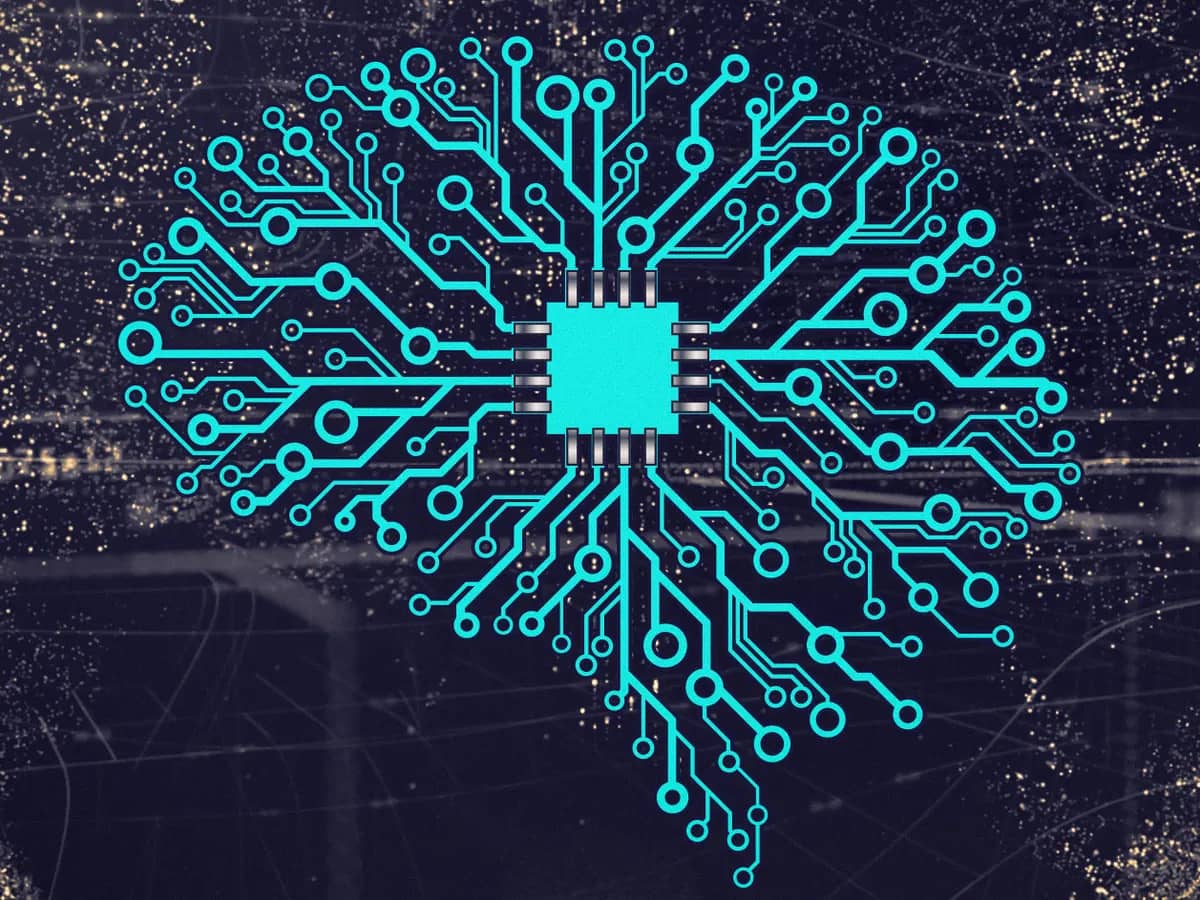
The AI Model Race Heats Up: GPT-5.6, Claude Opus 4.6, Gemini 3.6, and DeepSeek-V4 Go Head to Head
Summer 2026 saw a wave of new large language model releases. From GPT-5.6 to DeepSeek-V4, here's where the model race stands and what it means for users.
Read more→Comments
No comments yet — be the first to comment.