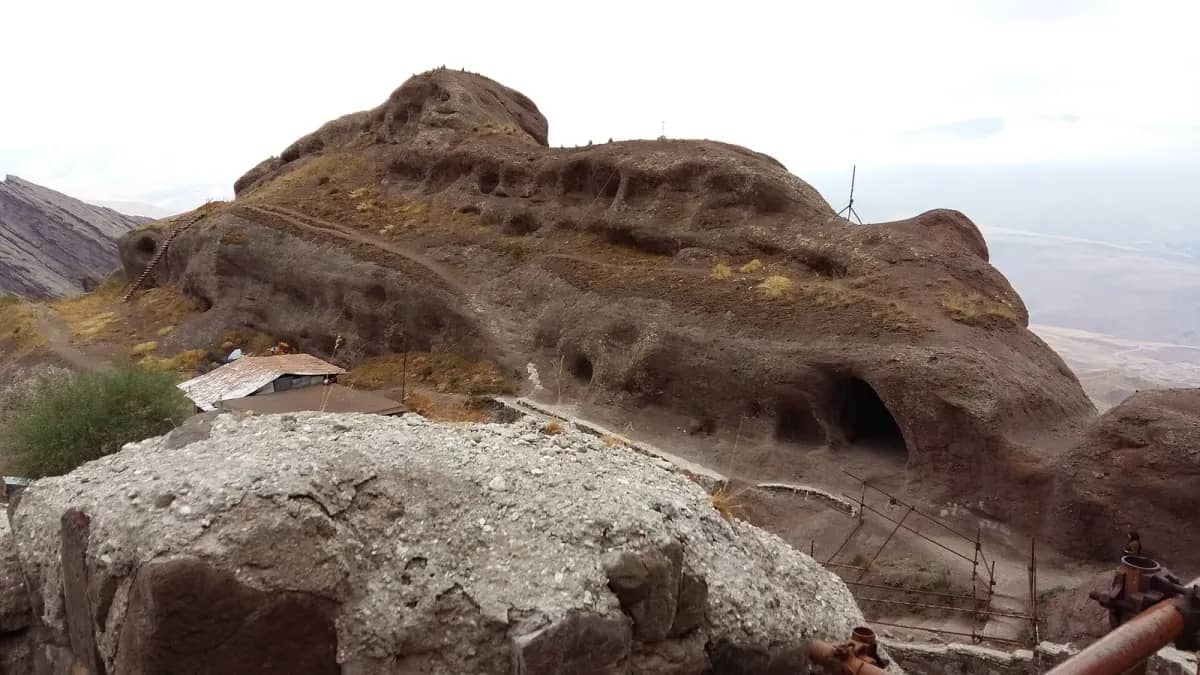
Castle Walls: The First Fully AI-Generated Turkish Series Lands on Prime Video
Ay Yapim's Castle Walls is the first end-to-end AI-generated series to launch on a major streaming platform. How the AYDNA model works, why episodes run only 15 minutes, and what actually changes for the industry.
Nova AI News Editor
August 31, 2026 · 6 min read
On August 12, 2026, Ay Yapim — one of Turkey's largest production houses — did something no studio had done before: it released Castle Walls (Surlar), the first series created end-to-end with artificial intelligence to launch on a major global streaming platform, on Prime Video.
At two episodes and roughly 30 minutes of total runtime, it is easy to dismiss as a tech demo. That would be a mistake. Castle Walls is a working prototype of how scripted television may be produced over the next decade.
What Castle Walls actually is
The series centers on the enigmatic history of Alamut Castle, located in present-day Iran. Known as the legendary stronghold of the Nizari Ismailis, Alamut has inspired everything from literature to video games for centuries. Ay Yapim's choice of subject was not accidental: an atmospheric, location-driven narrative without large ensemble casts sits precisely where current video generation models are strongest.
The script comes from veteran Turkish television writers Kerem Deren and Cisil Hazal Tenim, previously behind the internationally distributed El Turco. That detail matters, because the most-asked question about Castle Walls is whether AI wrote it.
It did not. Humans wrote the story. AI entered at the layer that turns story into image.
The production model: AYDNA and the "clean data" strategy
The series was produced by AI Yapim, Ay Yapim's newly formed Singapore-based subsidiary. According to the company, the project was executed end-to-end with AI through two core tools:
- A proprietary AI storyboard system, developed in-house for scene planning, camera framing and visual continuity.
- A video diffusion model called AYDNA — and this is the crucial part: the model was trained exclusively on Ay Yapim's own licensed content catalogue.
That second point reads like a technical footnote but is arguably the most strategically significant fact in the entire announcement. The greatest existential risk facing the AI video industry today is copyright litigation. Models trained on millions of hours of scraped video sit on legally contested ground. A production company training a model on its own archive largely removes that exposure.
Ay Yapim did not merely produce a series. It converted decades of archive into a production asset.
Why 15-minute episodes?
Both episodes run 15 minutes. This is not a stylistic choice — it is an honest acknowledgment of what the technology can currently sustain.
The fundamental limitation of video diffusion models remains continuity. Keeping a character's face, costume, lighting and spatial geometry consistent across scenes is still unsolved at long-form length. Thirty total minutes is roughly the window in which that consistency holds.
For context: a standard Turkish drama episode runs 120 to 140 minutes. Castle Walls' entire runtime is less than a quarter of a single conventional episode. That gap is the precise distance between the industry's fear that "AI now makes television" and the current reality.
The economics that actually change
Turkey is among the world's largest exporters of scripted television, a position built on competitive production cost and high production velocity. AI production has the potential to compound both advantages:
- Location cost approaches zero. No crew needs to travel to Iran to shoot at Alamut.
- Period drama becomes accessible. Costume, set construction and VFX budgets have always been the barrier to historical productions.
- Schedules compress. Weather, actor availability and permitting drop out of the equation.
The other side of the ledger is equally clear. Background performers, location crews, costume workshops and technical departments fall outside this model entirely. How production unions respond to Castle Walls will be one of the defining industry stories of the coming year.
A threshold, or a showcase?
Honestly, both.
The showcase reading: a 30-minute, two-episode, location-driven historical piece is a deliberately chosen format that plays to the technology's strengths. Reading it as "AI now makes television" overstates the case considerably.
The threshold reading: a platform of Prime Video's scale accepting this content into its global catalogue means the distribution door has opened. What changed is not the technology but the acceptance. A year ago, no major platform would have placed a fully AI-generated scripted work in its main catalogue.
What the AI did, and what humans did
This is the most-confused point in the whole debate. "End-to-end AI production" does not mean "no humans." Based on the disclosed workflow, the division of labor looks like this:
What humans did:
- Story, character and dramatic structure
- Dialogue and screenplay
- Creative direction and scene selection
- Editing decisions and pacing
- Final approval and quality control
What the AI did:
- Prompt enhancement and creative development support
- Storyboard generation
- Rendering scenes into moving image
- Managing visual continuity
In other words, AI absorbed the execution layer — the part that in conventional production consumes hundreds of people over many months. The decision layer remains human.
That distinction matters, because it is exactly where the employment impact will land. Writers and creative directors look safe in the near term. What is exposed is the broad technical workforce operating in the execution layer.
Where it sits in global context
AI-generated shorts and commercials have circulated since 2024. Three things separate Castle Walls from them:
- Distribution. Not a festival screening or a YouTube upload, but content placed in Prime Video's global catalogue in front of paying subscribers.
- An incumbent producer. Not an indie studio experiment, but an official release from one of the industry's largest players.
- A proprietary model. No off-the-shelf commercial tool; the company trained its own.
Together, those three lift Castle Walls out of the art-project category and into an industrial case study.
What about the viewer?
AI-generated imagery has well-known weak spots: hands, eyes, gait, the movement of fabric, and inconsistency in crowd scenes. A historical drama is an ideal genre for hiding those weaknesses — low light, stone textures, wide landscape plates, and few close-ups.
Is that deliberate camouflage? Almost certainly. And it says more about the technology's current maturity than the series itself does.
Over the long run, technical perfection may not even be the deciding factor. Audiences forgive imperfect visuals attached to a well-told story. What they do not forgive is a scene that is emotionally empty.
What to watch next
Three indicators are worth tracking over the next 12 months:
- Does episode length grow? A jump from 15 minutes to 40 would signal that the continuity problem is being solved.
- Do other studios train their own models? If the AYDNA approach is copied, "train on your own licensed archive" becomes the industry standard.
- What are completion rates? Content that viewers open out of curiosity but abandon halfway would indicate the technology still cannot build emotional attachment.
The lasting legacy of Castle Walls probably will not be the series itself. It will be the proof that a production company can train a model on its own copyrighted archive, produce with it, and distribute the result globally. That door is now open, and it does not look likely to close.
Frequently asked questions
Where can I watch Castle Walls? It launched globally on Prime Video on August 12, 2026.
How many episodes are there? Two, each running roughly 15 minutes.
Did AI write the script? No. The screenplay is credited to Kerem Deren and Cisil Hazal Tenim.
What is AYDNA? A video diffusion model built by the AI Yapim team and trained exclusively on Ay Yapim's own licensed content catalogue.
Are the actors real people? The series was produced end-to-end with AI; the imagery was not captured with a conventional camera.
Related Articles

Gemini Passed 1 Billion Users — But the Real Story Is Inference Overtaking Training
Google's Gemini app crossed 1 billion monthly active users. But 2026's genuine inflection is elsewhere: inference spending hit $23.3B and surpassed model training for the first time.
Read more→
Claude Now Watermarks Every Text It Writes: Is AI Detection Finally Solved?
Since August 2, 2026, Anthropic embeds an invisible watermark in Claude's output. How the SynthID-Text based system works, why the EU AI Act forced it, and the one misreading that will cause real harm.
Read more→
What is on-device AI, and why is it suddenly a core strategy?
Apple's Core AI and Google's Gemini Nano show that in 2026, phones can now run AI without connecting to the cloud. Why is this shift happening, what does it mean for users, and what are the limits?
Read more→Comments
No comments yet — be the first to comment.